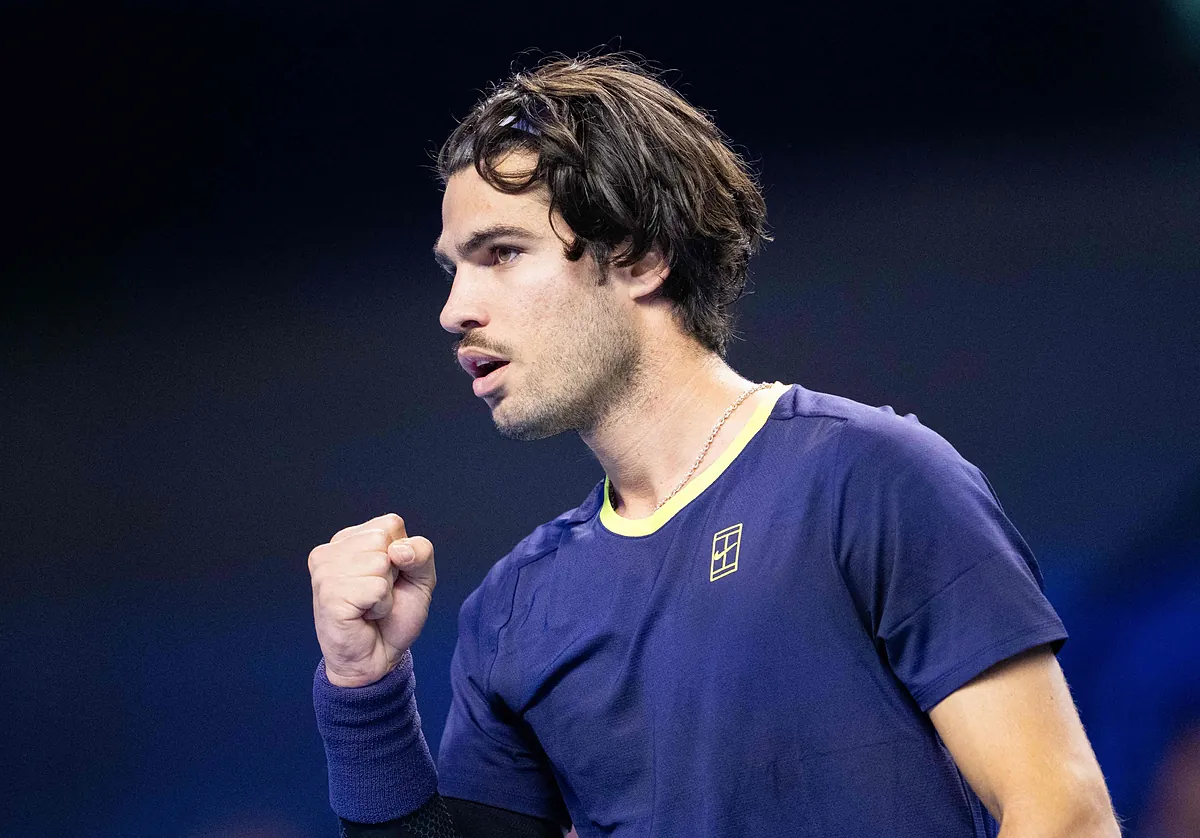
On October 30, 2026, the tennis world witnessed more than just a victory in the quarter-finals of the Vienna ATP 500; it witnessed a shift in the very nature of Carlos Alcaraz's dominance. Facing off against Tommy Paul, Alcaraz did not merely win; he dismantled the tension that usually accompanies such high-level encounters. The match, characterized by its closeness, served as a litmus test for a player often celebrated for his flair, but now increasingly defined by his ability to remain unshakeable when the margins grow thin.

Alcaraz has long been a figure of spectacle, a player whose kinetic energy can captivate a crowd. Yet, as he moved past Paul to secure his place in the semifinals, the narrative surrounding him began to pivot. It is no longer just about the brilliance of the shot, but the reliability of the player. He is growing in confidence and skill, transforming the chaotic energy of his early career into a disciplined, tactical force that is becoming increasingly difficult to unseat.
To understand how Alcaraz managed to navigate the pressure of the Vienna courts, one must look at the technical foundation of his performance. A key component of his victory over Paul was a remarkably disciplined service game. On this day, Alcaraz maintained an 82% first serve percentage, a statistic that speaks to a level of precision that leaves opponents with little room to breathe.
He is learning to navigate the 'close' moments, the points where a single error could derail a tournament run, and emerging from them with his focus intact.
In professional tennis, the serve is the ultimate tool of control, and Alcaraz’s ability to land his first delivery with such frequency allowed him to dictate the tempo of the match. By minimizing second-serve vulnerabilities, he effectively neutralized the opportunities Paul might have used to turn the tide. This strength at the service line provided the platform for a performance that was as much about mathematical efficiency as it was about athletic prowess.

STOP THAT, CARLOS! 🤯🤯🤯 Out of this world volley from Alcaraz! 🔥 @ErsteBankOpen | #ErsteBankOpen | @carlosalcaraz https://t.co/wTRI19TBLA
Winning a match is often a matter of skill, but winning a close match against a formidable opponent like Tommy Paul is a matter of temperament. The quarter-final was not a runaway affair; it was a contest that required Alcaraz to lean into his evolving psychological toolkit. He demonstrated an improved ability to handle pressure, a trait that separates the great players from the merely talented.
When the momentum threatened to shift, Alcaraz remained composed. This capacity to absorb the weight of the moment—to stay steady when the scoreline tightens—is the hallmark of his current progression. He is learning to navigate the 'close' moments, the points where a single error could derail a tournament run, and emerging from them with his focus intact.
This victory is not an isolated incident of brilliance, but rather a continuation of a burgeoning trend in Alcaraz's season. His performance in Vienna underscores a growing mastery of the ATP 500 circuit. This year, Alcaraz has secured 14 victories in 14 ATP 500 matches, a statistic that highlights a level of consistency that is becoming his new standard.
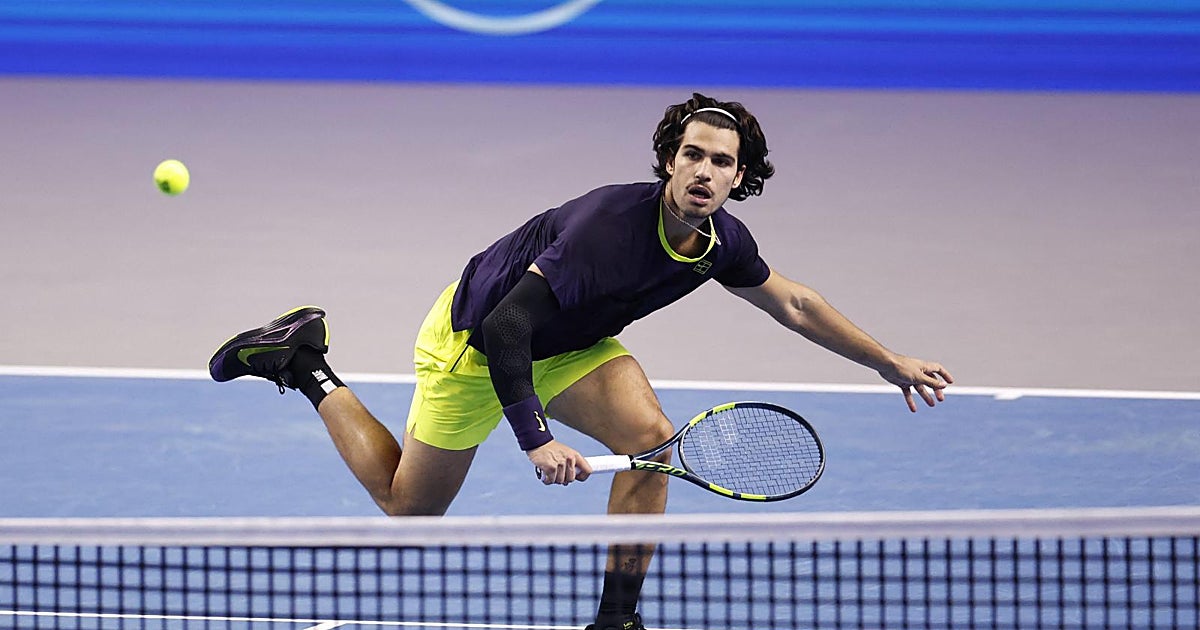
To win 14 out of 14 at this level of competition requires more than just flashes of genius; it requires a sustained, pragmatic approach to the game. It suggests that Alcaraz has figured out the specific requirements of these tournaments—how to manage energy, how to exploit openings, and how to maintain a high baseline of play across multiple rounds. He is no longer just competing in these events; he is conquering them.
With his victory over Paul, Alcaraz has cleared the path to the semifinals, setting the stage for a high-stakes showdown against Daniil Medvedev. If the quarter-final was a demonstration of Alcaraz's growth, the upcoming match against Medvedev will be the ultimate test of that evolution.
Medvedev represents a different kind of challenge, a tactical puzzle that will require Alcaraz to marry his newfound pragmatism with his natural attacking instincts. The semifinals in Vienna have become a crossroads where Alcaraz's momentum meets one of the most formidable defensive forces in the game.
As the Vienna ATP 500 moves toward its conclusion, the impression left by Alcaraz is one of a player who has found a new gear. He has moved beyond the stage of pure potential and into a phase of realized execution. By combining a powerful, consistent serve with a hardened mental approach, he is building a version of himself that is built for the deepest stages of the sport.
For the fans in Vienna and the spectators watching globally, the spectacle remains, but it is now underpinned by something much more dangerous for his opponents: a relentless, composed, and highly efficient will to win.