
It was a Tuesday that many Qataris would have marked on their calendars for the usual reasons—work, school, perhaps a quick coffee at a roadside kiosk. Yet, as the morning progressed, clouds that had lingered on the horizon began to thicken, and a gentle patter turned into a measurable downpour. By the time the rain ceased, Al Karaana, a settlement southwest of Doha, had logged 10.7 mm of precipitation, the highest amount recorded anywhere in the country that day. In the neighboring Bay Al Qa’a, the rain gauge showed a more modest 6.3 mm. While those numbers would be considered a drizzle in many parts of the world, in the arid landscape of Qatar they were enough to turn heads.
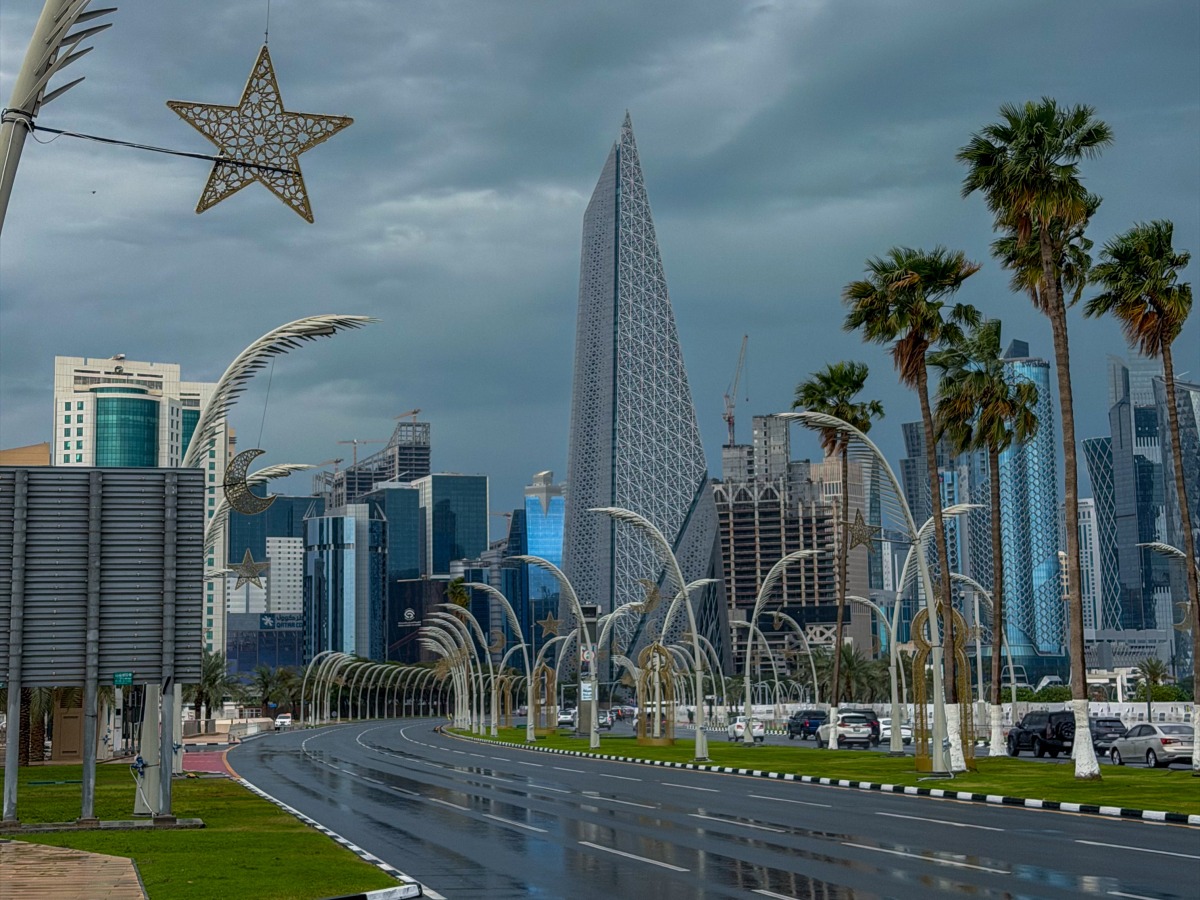
The Qatar Meteorology Department (QMD) operates a network of stations that continuously record weather data across the peninsula. On October 13, the department’s instruments at Al Karaana captured the 10.7 mm total, a figure that stood out against the backdrop of light to moderate rain reported in other regions. The Bay Al Qa’a station, situated closer to the coast, logged 6.3 mm, underscoring how quickly rainfall can vary over short distances in a desert environment. These measurements are not merely numbers; they feed into the national climate archive, help calibrate future forecasts, and provide a snapshot of how even modest storms can affect water‑sensitive ecosystems.

Al Karaana recorded the highest rainfall in Qatar on Tuesday, October 13, with 10.7mm, according to the Qatar Meteorology Department (QMD). Bayd Al Qa’a station recorded 6.3mm of rainfall, the department said in a social media post. For Wednesday, QMD forecast hazy conditions in some areas at first, with some clouds and relatively hot daytime weather. There is also a chance of localised rain clouds developing in the afternoon, which may be accompanied by thunderstorms. Winds are expected to be northeasterly, ranging from light to moderate in speed, with strong gusts possible during thunderstorms.
Even as the rain fell, forecasters were already looking ahead. The QMD issued a short‑term outlook for the following day, warning of hazy to misty conditions accompanied by a chance of local thunderstorms. In meteorological terms, “hazy” indicates the presence of fine particles—often dust or pollutants—that scatter sunlight, while “misty” suggests a thin veil of moisture that reduces visibility without necessarily producing rain. The mention of thunderstorms adds a layer of uncertainty; in a region where convective storms can develop rapidly, a slight uptick in atmospheric instability can spawn lightning, gusty winds, and brief, intense bursts of rain.
October sits at the transition between Qatar’s scorching summer and the milder winter months.
To the casual observer, 10.7 mm may seem inconsequential—a splash on a windshield, a brief puddle on a road. Yet in Qatar’s hyper‑arid climate, every millimetre of water carries weight. Rainfall is a critical component of groundwater recharge, and even small events can influence the moisture balance of soils, the health of native vegetation, and the operation of irrigation systems that sustain agriculture and landscaping. Moreover, the QMD’s precise reporting enables planners to assess whether such events contribute meaningfully to the nation’s water‑security strategies, which rely heavily on desalination and careful management of scarce natural reserves.
October sits at the transition between Qatar’s scorching summer and the milder winter months. Historically, the country experiences a modest increase in precipitation during this period, though totals remain low compared to more temperate regions. The 10.7 mm recorded in Al Karaana aligns with the seasonal expectation of occasional showers, yet it still stands out as the day’s peak. By documenting these spikes, the QMD builds a granular picture of how rainfall distributes itself across the peninsula, information that can be cross‑referenced with long‑term climate models to detect subtle shifts over years.
The rain that fell on October 13 may have been brief, but its documentation illustrates a larger story about how Qatar monitors and responds to its environment. The QMD’s timely forecast—warning of hazy conditions and potential thunderstorms for Wednesday—demonstrates a proactive approach to public safety and infrastructure preparedness. Residents and businesses can adjust travel plans, protect outdoor equipment, and anticipate any disruptions. At the same time, the recorded data enriches the scientific community’s understanding of desert meteorology, feeding into research that explores how climate change might alter precipitation patterns in the Gulf region.
As Wednesday arrived, the Qatar Meteorology Department's forecast of hazy to misty conditions with a chance of thunderstorms remained in effect, and the threat of thunderstorms kept a watchful eye on the horizon. While the rain of Tuesday has long since evaporated, its imprint remains in the official records and in the subtle ways it may have nudged the local water table. For a nation that has long grappled with water scarcity, each droplet is a reminder of nature’s occasional generosity and the importance of precise, transparent weather reporting. The QMD’s role—measuring, forecasting, and communicating—continues to be a vital thread in the fabric of Qatar’s environmental stewardship.