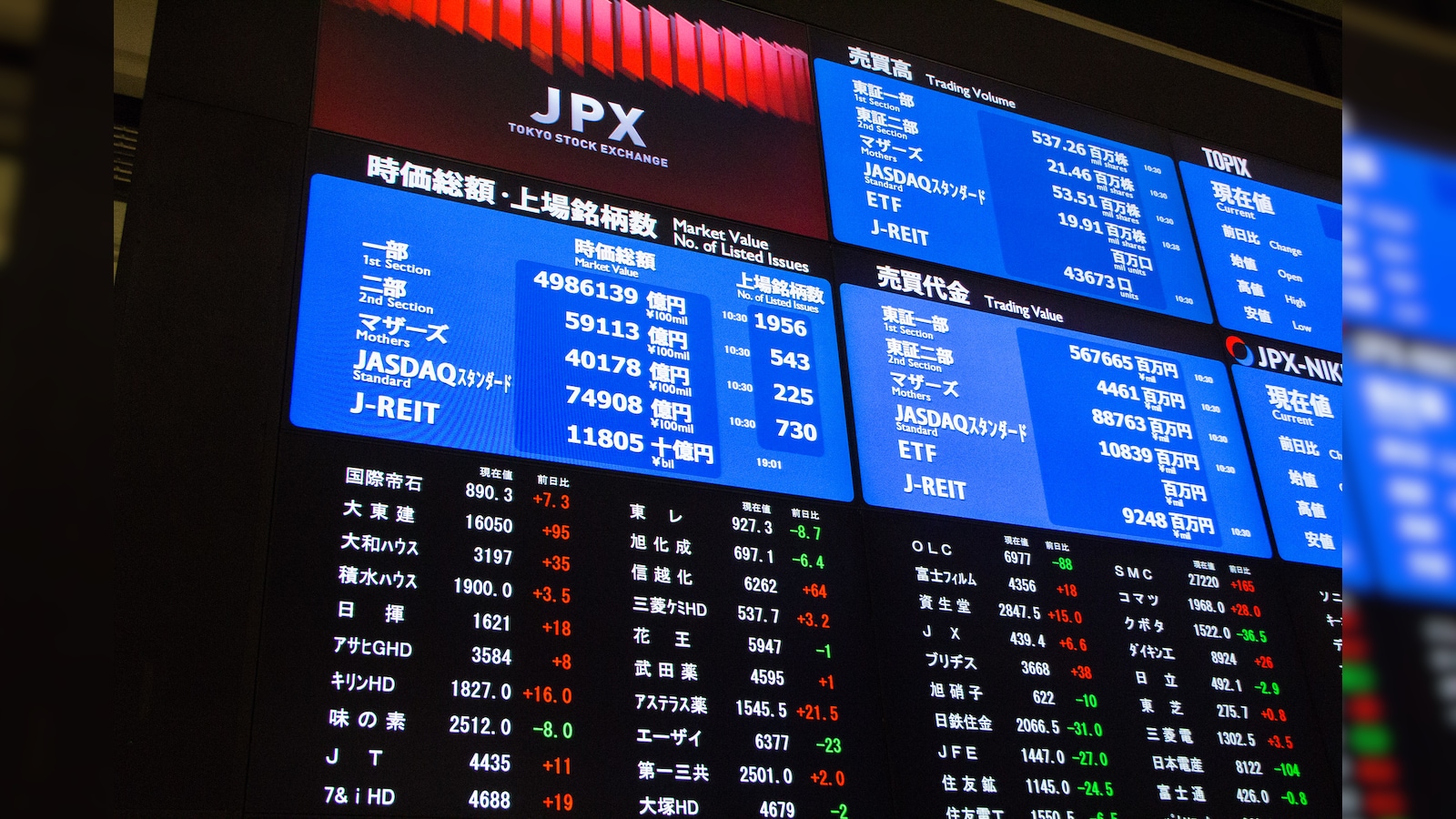
On Tuesday, October 20, the global financial landscape presented a stark contrast between the performances of Asian and U.S. markets. While Asian indices like South Korea's Kospi and Japan's Nikkei 225 faced significant declines, U.S. markets, particularly the Nasdaq and S&P 500, showed resilience, climbing up to 1%. This divergence reflects the complexities and interconnectedness of today’s global economy, where regional challenges can lead to varied outcomes across markets.

The day was marked by a sharp selloff in Asian markets, particularly in South Korea, where the Kospi index fell by 3.51%. This downturn was largely driven by significant declines in major technology stocks, including SoftBank, which saw its shares fall by 5.22%. The tech sector has been a bellwether for market performance, and its struggles in Asia can be attributed to a combination of geopolitical tensions and rising crude oil prices, which have dampened investor sentiment.

🚨 CRASH IN JAPAN Over ¥100 TRILLION ($700 BILLION) wiped off Japanese stocks as the NIKKEI plunges nearly 10% over the last 9 trading sessions. It continues... https://t.co/7lJv0W63SY
The backdrop of geopolitical tensions has loomed large over the markets, exacerbating fears among investors. With crude oil prices hovering around $110 per barrel, the economic implications of rising oil costs cannot be overlooked. Higher oil prices typically translate to increased costs for businesses and consumers, leading to inflationary pressures that can stifle economic growth. This environment has heightened uncertainty, causing investors to tread cautiously, particularly in the tech-heavy sectors that are more sensitive to such fluctuations.
The Indian stock market remained closed on October 20 due to the Dussehra holiday, leaving investors unable to react to the fluctuations occurring in Asian and U.
In contrast to the turmoil in Asia, U.S. markets exhibited a more optimistic outlook on the same day. The Nasdaq Composite climbed by 1.11%, while the S&P 500 saw a gain of 0.41%. Investors await upcoming earnings reports from major companies, which will provide crucial insights into corporate health and market direction.

South Korea’s KOSPI was down 2.6% and Japan’s Nikkei 225 0.6% in Tuesday trading as technology shares weakened. The broader risk-off move can pressure semiconductor valuations and raise near-term volatility. #Markets #Asia #Semiconductors https://t.co/QGw36DqnjZ
While the Nasdaq and S&P 500 enjoyed gains, the Dow Jones Industrial Average experienced a slight slip, falling by 63 points. This mixed performance among U.S. indices underscores the complexity of the current market environment.
The Indian stock market remained closed on October 20 due to the Dussehra holiday, leaving investors unable to react to the fluctuations occurring in Asian and U.S. markets.

🚨 JAPANESE MARKET IS CRASHING HARD NIKKEI has now crashed more than 9% in the last 13 days, wiping out over ¥100 trillion (about $650 billion) from its market cap. https://t.co/jzji1gFzT9
As the day concluded, the mixed performances of the markets left investors with much to ponder. The declines in Asian markets highlight vulnerabilities, particularly in the tech sector, while the resilience of U.S. indices suggests that not all regions are equally affected by global pressures. The upcoming earnings reports will be pivotal in determining whether this divergence continues or if a more unified trend emerges across the markets.

In conclusion, the global financial landscape on October 20 exemplified the complexities of today’s interconnected markets. As investors navigate through geopolitical tensions, fluctuating oil prices, and upcoming earnings reports, the path forward remains uncertain. The ability to adapt to these changing conditions will be crucial for investors aiming to capitalize on opportunities while mitigating risks in a volatile environment.