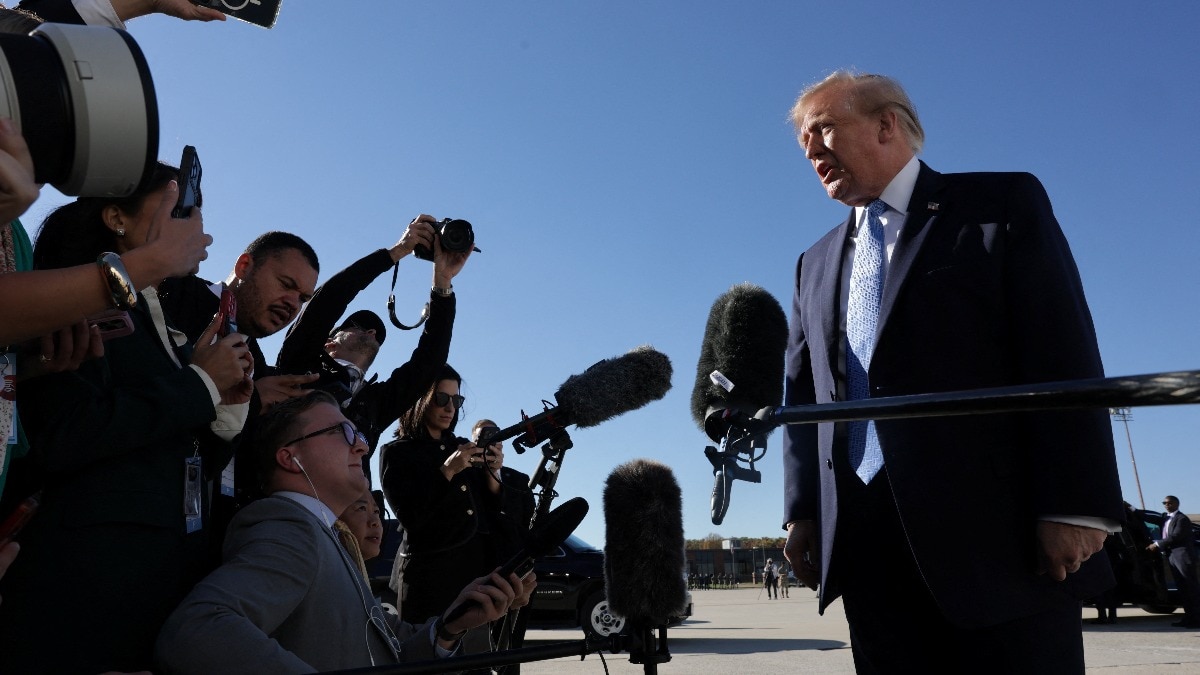
For anyone watching the machinery of American democracy, the friction between institutional rules and populist skepticism is hardly new. Yet the mechanisms deployed to challenge or defend that machinery continue to evolve in striking ways. Donald J. Trump announced a $1,000,000 reward directed at anyone who comes forward with information regarding voter fraud.

This high-stakes offer is not merely forward-looking. According to the announcement, the bounty extends its reach backward into past elections as well as forward into the future. But collecting the seven-figure sum is not as simple as making a phone call or lodging a complaint. The payout carries a strict contingency, tying the financial reward directly to the judicial system's final output: the ultimate arrest and conviction of those deemed responsible for creating the fraud.
As the offer entered the public sphere, the details were laid out in explicit terms by Trump himself. Explaining the parameters of the payout, Trump stated: “I’m also going to be issuing a $1m bonus or reward, or whatever you want to call it, for anybody that reports voter fraud, leading to the arrest and conviction of somebody.” He later elaborated on the dual-election timeline of the initiative, specifying the scope of the eligible cycles: “Anybody reporting Voter Fraud in the past Elections, or the upcoming 2026 Midterm Election, will be paid $1,000,000 upon the arrest and conviction of those that created the Fraud!”
On the exact same day, the critique of electoral integrity took on an international dimension when Trump turned his focus toward Brazil.
The timing of this financial incentive is linked to the political calendar. The announcement arrives ahead of the 2026 midterm elections, a moment when political attention is focused on the integrity of the ballot box. By pairing a monetary reward with these upcoming contests, the strategy taps into long-standing, repeated claims of widespread voter fraud that have formed a central pillar of Trump's political narrative over successive election cycles.
Yet the ambitions of this rhetoric did not stop at domestic borders. On the exact same day, the critique of electoral integrity took on an international dimension when Trump turned his focus toward Brazil. Questioning the legitimacy of Brazil's electoral process, he publicly claimed that the country's vote “looked like another rigged election.”
Such sweeping international assertions naturally demand a swift institutional response. In Brazil, the defense of the nation's democratic framework was mounted rapidly by high-ranking officials. The country's Vice President stepped forward to defend the electoral system against the external skepticism, pushing back against the notion that the process was compromised.
Where these developments leave the broader conversation on democratic norms is a matter of ongoing debate. As the intersection of private financial incentives, domestic midterm preparations, and international diplomatic friction continues to play out, the fundamental arguments over who guards the ballot—and how trust in elections is maintained—remain as sharp and polarized as ever.
