On October 9, 2023, Maharashtra’s chief minister, Eknath Shinde, unveiled a water‑management scheme costing roughly ₹19,000 crore. The proposal calls for diverting 40 TMC (million cubic metres) of water from the Krishna River into the Bhima River, a tributary that already supplies much of Maharashtra’s interior. Shinde said the project, backed by the World Bank, aims to address Maharashtra’s water needs.

At a projected cost of ₹19,000 crore, the diversion would move a substantial share of the Krishna’s annual flow, potentially reshaping irrigation patterns downstream.
Maharashtra has earmarked ₹24 crore for feasibility studies, a sum slated for completion by July 2026. Patil questioned how the World Bank could approve funding without explicit central‑government clearance, a procedural step traditionally required for projects of this scale.
The Almatti Reservoir, fed by the Krishna’s upstream flow, is a critical source of irrigation for Karnataka’s fertile plains.
According to M.B. Patil, the Krishna Water Disputes Tribunal‑II verdict on the issues raised by the diversion plan remains unpublished. The unpublished verdict leaves the legal implications unclear, prompting both states to await further clarification.
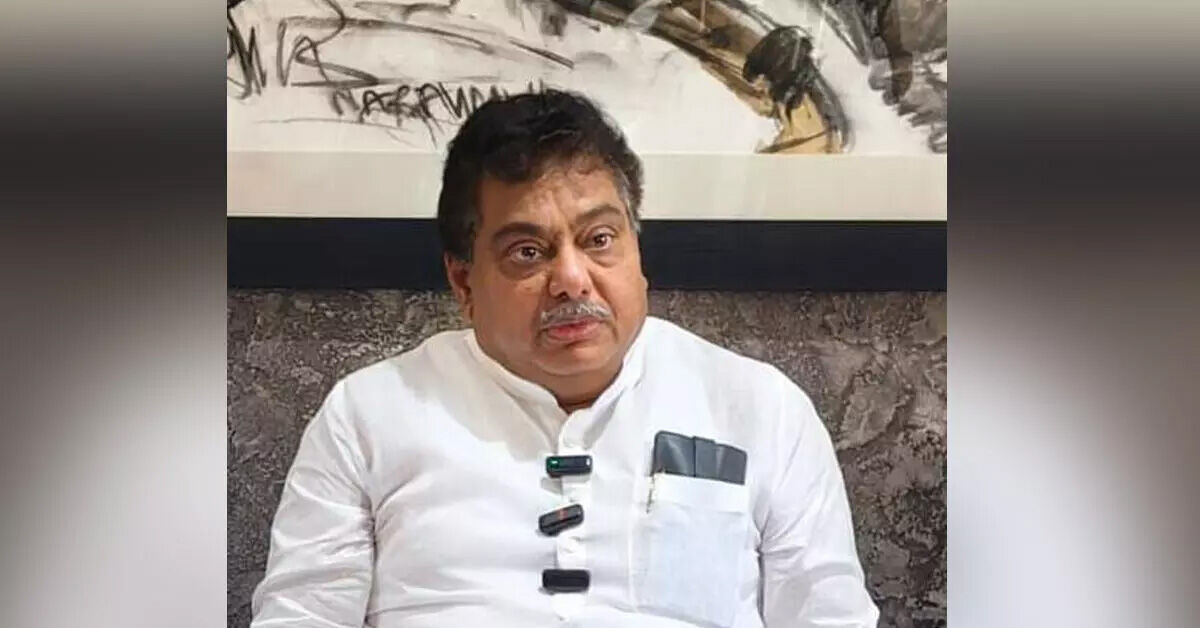
M.B. Patil, Karnataka’s minister for Vijayapura, responded with sharp criticism. “This move threatens Almatti Reservoir’s inflow and Karnataka’s interests. We will address this in an upcoming all‑party meeting,” he declared, framing the diversion as a direct affront to his state’s agricultural lifeline. The Karnataka government has rallied behind Patil’s stance, signaling a coordinated political push against the Maharashtra proposal.
The Almatti Reservoir, fed by the Krishna’s upstream flow, is a critical source of irrigation for Karnataka’s fertile plains. Diverting 40 TMC downstream could reduce the volume reaching the reservoir, potentially curbing water availability for crops that sustain millions of livelihoods and affecting hydroelectric generation.

Is the Congress government keeping Kannepalli Pumps idle to let water flow to AP via Pattiseema? Telangana is reportedly foregoing a significant opportunity to utilize Pranahitha floodwaters as the Congress government has not begun lifting water through the Kannepalli pump house, even as Andhra Pradesh has activated its Pattiseema and Tadipudi lift irrigation schemes to divert Godavari waters towards the Krishna Delta. According to available irrigation data, there has been no substantial rainfall in the Godavari basin due to El Niño conditions, and inflows into major reservoirs upstream of SRSP, Yellampalli, Sundilla and Annaram remain negligible. However, as of 9 PM on Thursday, the Medigadda Barrage was receiving an inflow of around 81,000 cusecs from the Pranahitha river, equivalent to nearly 7 TMC of water, with the water level standing at 97 metres. Despite the Kannepalli pumps being ready for operation and capable of lifting nearly 2 TMC of water per day from a river level of 93.5 metres, the Revanth government has not commenced pumping operations. Irrigation statistics indicate that around 60 TMC of water has flowed downstream so far this season. Of this, nearly 10 TMC flowed away during June, while another 49.23 TMC has reportedly been lost between July 1 and July 9. In contrast, Andhra Pradesh has already started operating the Pattiseema and Tadipudi lift irrigation schemes to transfer Godavari water to the Krishna Delta. Pattiseema is designed to lift up to 8,500 cusecs and supply about 80 TMC of irrigation water, while the Tadipudi system supplements the diversion through an additional lift arrangement. With reservoirs across the Godavari basin, including SRSP, remaining at dead storage levels and prospects of heavy upstream inflows uncertain, water experts argue that immediate pumping from Kannepalli and Devadula could help replenish key reservoirs to mitigate water shortages in Telangana.
Maharashtra’s commitment to finish the feasibility study by July 2026 sets a concrete timetable for the next phase. A broader feasibility report is expected by November 1, 2026, aligning with the state’s financial allocation of ₹24 crore. These milestones will determine whether technical challenges such as lift heights, energy consumption, and environmental impact can be surmounted within the projected budget.
As the feasibility timeline advances, the dispute has settled into a protracted political standoff. Maharashtra maintains a development‑oriented posture, citing World Bank support and its water needs. Karnataka, backed by Patil’s vocal criticism, continues to frame the project as a violation of its interests and of established legal norms. Until the KWDT‑II verdict is published and the feasibility studies are released, the Krishna‑Bhima diversion remains a contested vision, poised to reshape the water politics of India’s western heartland.