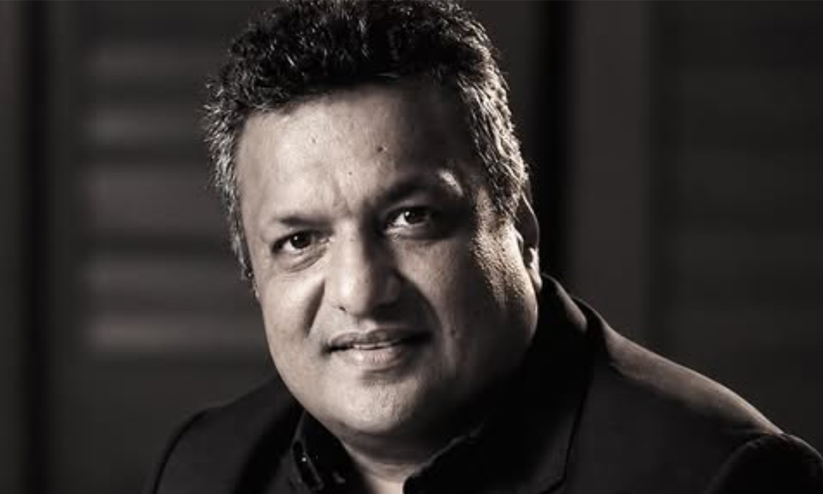
There are moments when the relentless machinery of the film industry simply grinds to a halt, caught off guard by the sheer fragility of human life. The entertainment world woke to a profound shock when the news broke that Sanjay Gupta, a defining voice in Hindi commercial cinema, had passed away. The loss reverberated instantly through social media and entertainment circles, leaving colleagues, critics, and admirers grappling with an abrupt absence where vibrant creativity had stood just hours before.

The circumstances of his passing were as sudden as they were tragic. At the age of 57, Gupta died following a serious head injury sustained from an accidental fall in his home bathroom. The domestic space, usually a sanctuary away from the exhausting demands of filmmaking, became the site of a fatal accident. The entertainment publication 'Film Information' and close associates confirmed the sequence of events, turning an ordinary day into a moment of collective grief for an industry that relies so heavily on motion and vitality.

Sanjay Gupta dies at 57: What led to the filmmaker’s death? https://t.co/xR5zvKcxVB
To understand what Hindi cinema lost, one must look back at the cinematic landscape Gupta helped shape. He carved a distinct niche for himself in a crowded industry by anchoring his career in the visceral worlds of action and crime thrillers. At a time when Bollywood was searching for fresh stylistic pulses, Gupta emerged with a distinct visual language that embraced high-contrast grit, complex anti-heroes, and slick gangster dramas. He did not merely participate in the genre; he helped redefine what a Hindi action film could look and feel like.
He captured the public imagination with films like 'Kaante' in 2002, followed by 'Musafir' in 2004 and 'Zinda' in 2006.
The journey began decades earlier, establishing a long and impactful career. In 1994, Gupta made his directorial debut with 'Aatish: Feel the Fire'. That initial step behind the camera laid the groundwork for a prolific filmmaking life. Over the years that followed, he built a reputation as a passionate storyteller who understood the mechanics of suspense and the electric energy of the big screen.

Life is uncertain always. Sanjay Gupta @_SanjayGupta , director of Bollywood films such as Kaante and Shootout at Lokhandwala is no more. The cause of death is not yet known. He was 59.
Throughout his career, Gupta delivered a string of notable directorial ventures that left an indelible mark on audiences. He captured the public imagination with films like 'Kaante' in 2002, followed by 'Musafir' in 2004 and 'Zinda' in 2006. His filmography continued to expand with bold projects including 'Shootout at Lokhandwala', 'Shootout at Wadala', 'Jazbaa', 'Kaabil', and 'Mumbai Saga'. Each project showcased his relentless dedication to high-stakes narratives and stylish, kinetic filmmaking.
Gupta's career was also defined by enduring creative partnerships and institutional building. He frequently collaborated with actor Sanjay Dutt, forging a powerful actor-director synergy that yielded some of the era's most memorable testosterone-driven dramas. Beyond directing, he sought creative independence by founding his own production banner, 'White Feather Films', in 2001. This banner allowed him to shepherd his unique vision onto the screen with greater autonomy, cementing his status as a hands-on auteur within the commercial studio system.

‘𝐊𝐚𝐚𝐧𝐭𝐞’ 𝐃𝐢𝐫𝐞𝐜𝐭𝐨𝐫 𝐒𝐚𝐧𝐣𝐚𝐲 𝐆𝐮𝐩𝐭𝐚 𝐃𝐢𝐞𝐬 𝐀𝐟𝐭𝐞𝐫 𝐁𝐚𝐭𝐡𝐫𝐨𝐨𝐦 𝐅𝐚𝐥𝐥 | Bollywood filmmaker, writer and producer Sanjay Gupta, known for his hard-hitting crime dramas and stylised action thrillers, passed away on October 30, 2026, at the age of 59. He reportedly suffered a fatal head injury after slipping in the bathroom at his residence. His death was confirmed by filmmaker Ashoke Pandit. Gupta leaves behind a distinctive cinematic legacy through films like Kaante, Shootout At Lokhandwala, Kaabil and Mumbai Sag
As the news of his passing on October 30, 2026, spread across the country, fellow filmmakers, critics, and industry leaders poured out their tributes. Prominent figures including critic Taran Adarsh and FWICE chief advisor Ashok Pandit voiced their sorrow over the immense loss to the film community. Fellow filmmaker Ashoke Pandit took to social media to share his grief, capturing the profound disbelief felt by those who knew him best. Expressing his shock on social media, Ashoke Pandit wrote: "It’s really shocking and sad. Just got the news that our dear friend an ace director Sanjay Gupta is no more. He passed due to a head injury at home. Another talent gone too soon. He was a wonderful narrator, full of life persona & a passionate filmmaker. A great loss to our industry. Will miss you my friend. Condolences to his family & dear ones. Om Shaanti."

Today, the film industry confronts the reality of a talent gone too soon. From his explosive debut in the nineties to his stylish cinematic explorations of the underworld, Sanjay Gupta leaves behind a robust catalog of work that defined an era of Hindi action cinema. As family, friends, and fans mourn the unexpected loss, the vibrant worlds he built on celluloid remain—a lasting testament to a passionate filmmaker who lived life on his own terms.