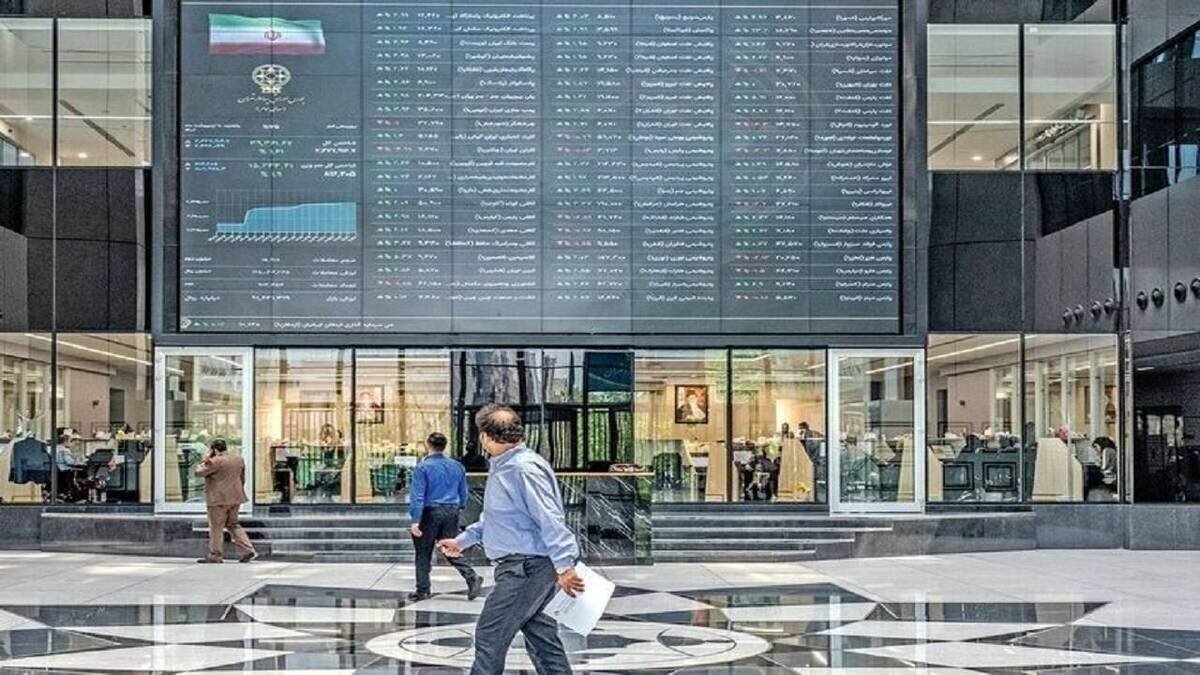
On October 20, 2026, Iran's capital markets experienced a notable surge during morning trading, with both the Tehran Stock Exchange and Iran Fara Bourse showing strong upward trends. The Tehran Stock Exchange main index climbed by 95,024 units, reaching a level of 8,348,846 units, representing a substantial increase in market value. This growth wasn't isolated to the main index alone, as the equal-weighted index also rose by 37,468 units, indicating broad-based strength across various stocks.
The surge in market indices was accompanied by significant trading activity. The total value of transactions reached an impressive 136,319 billion units, while the number of trades exceeded 365,000. These figures demonstrate heightened investor participation and market liquidity during this trading session. Such volume suggests that the upward movement wasn't merely the result of a few large trades but rather reflected widespread buying interest across multiple securities.
Analysis of the market revealed interesting patterns in liquidity flows. By 10:12 AM, retail trading value had reached 17,188 billion Tomans, with a net real liquidity inflow of 1,774 billion Tomans entering stocks and equity funds. This positive flow of capital into equities suggests growing investor confidence in the market's direction. Conversely, fixed-income funds experienced an outflow of 2,617 billion Tomans, indicating a potential shift in investor preference toward equities over other asset classes.
Technical analysts noted that the strength of buyers was evident in the market's performance.
Technical analysts noted that the strength of buyers was evident in the market's performance. The significant increase in the main index, coupled with the rise in the equal-weighted index, suggested that buying pressure was widespread rather than concentrated in a few large-cap stocks. However, analysts cautioned that while these figures indicate high trading activity and buyer strength, further assessment of liquidity and trade volume would be necessary to confirm the sustainability of the trend.
Several specific companies played significant roles in driving the index growth. Among the key contributors to the upward movement were Fars, Webmellat, Tasico, and Vapasargad, which saw notable gains. On the other hand, Famali and Tapico exerted negative pressure on the index, demonstrating that not all stocks participated equally in the market's upward trajectory. This divergence in performance highlights the selective nature of the buying activity during this session.
The positive trend wasn't limited to the main Tehran Stock Exchange. Iran Fara Bourse, the country's over-the-counter market, also showed strong performance, with its main index increasing by 1,143 units. This parallel upward movement across both markets suggests a broad-based rally rather than a phenomenon confined to a single exchange. The Fara Bourse's main index reached a level of 67,401 units, further confirming the positive market sentiment.
While the market showed impressive strength during this trading session, analysts emphasized that these figures alone are not enough to confirm the entry of substantial real money or guarantee the sustainability of the upward trend. Further analysis of support and resistance levels, moving averages, and daily and weekly ranges would be necessary to determine whether the current upward movement has the foundation to continue. The market's performance in subsequent sessions would be crucial in assessing whether this surge represents a lasting shift in market sentiment or merely a short-term fluctuation.
