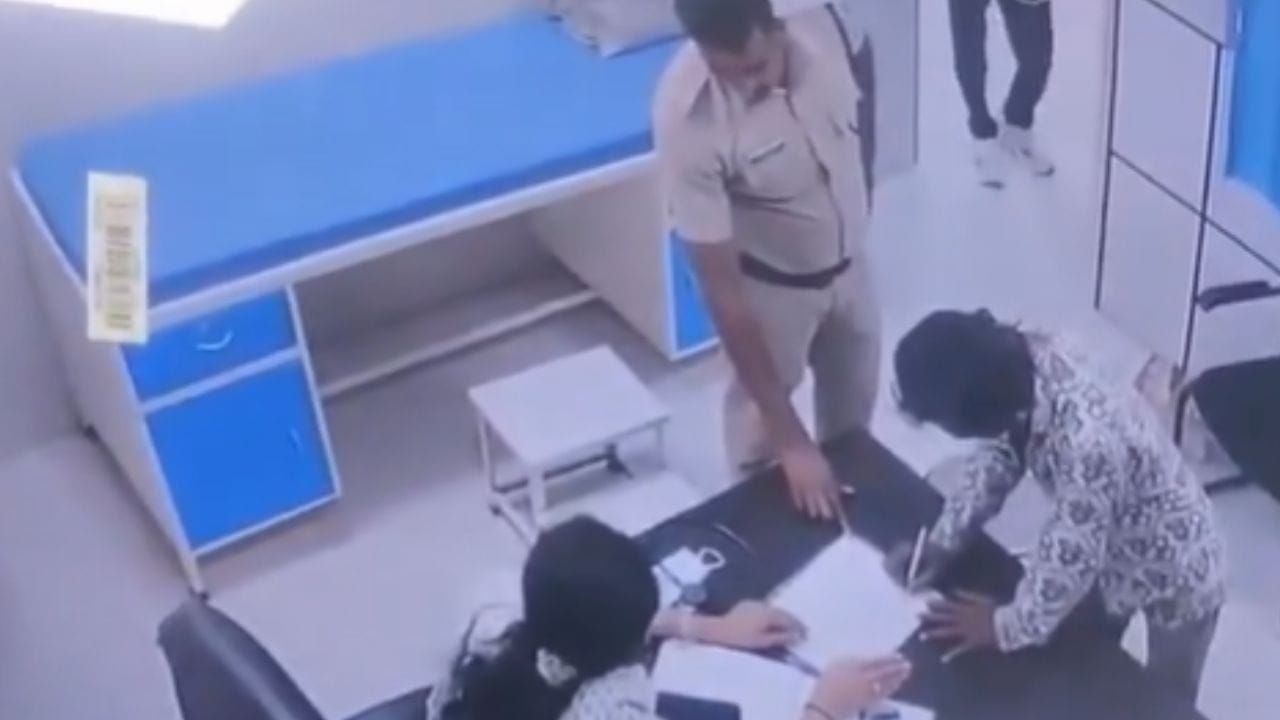
The most jarring part of the incident at the Talegaon Shyamji Pant Primary Health Center in Wardha, Maharashtra, was not the violence itself, but the audience. It was October 23, 2026, and the room was filled with five police officers, a court-appointed accused, and a female doctor. The video, now circulating online, captures a mandatory medical examination for Kadir Ali Razzaq Ali, who was brought in ahead of a court appearance. In the span of seconds, the accused turned and slapped Dr. Shraddha Bhumre. The police watched. The camera watched. And for a brief, frozen moment, nothing happened. It is a rare and horrifying glimpse into the daily reality of many government health centers, where security protocols collapse and the doctor is left exposed.

To understand the anger, you have to understand who was in the room. Dr. Bhumre was acting in her capacity as a government medical officer, conducting a standard pre-trial exam. Kadir Ali Razzaq Ali, the accused, was a prisoner of the state, escorted by five police officers on duty. These officers had a legal and professional mandate to keep everyone, including the doctor, safe. Yet, as the video shows, they stood as passive observers. The Gazetted Medical Officers Association, which represents these doctors, argues that the presence of police was not just a formality; it was a safety net. When that net tore, the result was not just a bruised cheek, but a public humiliation for the entire medical profession.

SHOCKING: A man identified as Qadir Ali allegedly slapped a woman doctor, Dr. Shraddha Bhumre, during a medical examination at a primary health centre in Wardha, Maharashtra. Doctors are outraged and demanding strict security. They are threatening to shut OPD services. https://t.co/JT7cexkrTf
The most damaging allegation is not that the accused acted; he was in custody, and his actions are part of the record. The allegation is that the five police officers present failed to take the "necessary precautions" they were paid to enforce. In a system where doctors are increasingly viewed as targets rather than caregivers, this failure is catastrophic. It suggests that the police, instead of protecting the public, are creating environments where violence is tolerated. The association’s complaint to the District Collector puts the blame squarely on these officers for negligence, not just on the man who threw the punch. This is a demand for accountability for inaction, a shift that could reshape how law enforcement interacts with healthcare facilities.
This is a demand for accountability for inaction, a shift that could reshape how law enforcement interacts with healthcare facilities.
The reaction from the medical community in Wardha has been swift and severe. The Gazetted Medical Officers Association is not just asking for a reprimand; they are demanding strict action against the accused and the negligent officers. More ominously, they have threatened to suspend their Outpatient Department (OPD) services. This is a dangerous threat. In the global fight against disease and injury, doctors are on the front lines, often with no real protection. If they stop seeing the public, the community loses. This is a standoff: a community that needs care versus a medical community that feels it no longer can provide it safely. The demand for "better security protocols" is not a request for new locks; it is a demand for a new operating environment, one where a doctor does not have to fear for her safety while performing her civic duty.

Another doctor assaulted in Maharashtra, this time in front of 5 policemen https://t.co/ZtQxrM7uH5
As of late 2026, the ball is in the court of the District Collector. The local police have been flagged, and the national media cycle has picked up the footage. The association is leveraging this attention to force a systemic change. They want more than a punishment for one man; they want a structural overhaul of how medical examinations are handled for prisoners. The case in Wardha has become a flashpoint. It illustrates a deep-seated fear that India's healthcare workers, the ones who heal when the system is at its most fragile, are the least protected members of the community. For Dr. Bhumre, the injury is physical, but the professional impact is far deeper: it forces a new calculation of risk every time she walks into an exam room.